Natalya Watson on WSET Beer Courses & Judging Beer


Key Takeaways
- Advanced Cicerone and WSET educator Natalya Watson joins host Martin to discuss the ins and outs of beer education, structured tasting, and judging.
- Studying beer through formal programs like WSET introduces a more systematic approach to tasting that can completely change how you experience what is in your glass.
- Understanding how to taste beer properly involves avoiding common tasting mistakes, recognizing the vital role of smell, and assessing style guidelines objectively.
- Becoming a beer judge requires separating personal preferences from professional competition criteria to fairly assess how well a beer fits its style.
- Natalya shares insights into her own podcast, Cheers with Nat, alongside quick-fire questions featuring her favourite beers and foundational breweries.
In this episode I’m joined by Natalya Watson to talk about beer education, tasting and judging.
Nat is an Advanced Cicerone, Beer Sommelier and WSET educator, as well as an experienced beer judge.
Learning about beer
What do you actually learn when you study beer?
We talk about WSET and how a more structured approach to tasting can change the way you experience what’s in your glass.
How to taste beer
Nat explains some of the biggest mistakes people make when tasting beer, why smell is so important and how to approach tasting more systematically.
We also talk about some of the beers used in WSET classes, including a Munich Dunkel
Becoming a beer judge
How do you actually become a beer judge?
Nat takes me through how she got started, what happens around the judging table and how judges separate personal preference from assessing a beer against competition criteria.
Finding your way into beer
We also talk about different beer styles, developing your palate and how you might introduce someone who doesn't think they're a beer drinker to something they could actually enjoy.
Cheers with Nat
Towards the end, we talk about Natalya’s own podcast, Cheers with Nat, and how it has evolved into conversations across the wider drinks world.
Quick fire
We finish with a few quick questions, including Natalya’s favourite beer, an underrated beer style and three breweries that have played an important part in her beer journey.
If you’ve ever thought about doing a WSET beer course, becoming a beer judge, improving your tasting skills or simply understanding more about what’s in your glass, there’s plenty here to get stuck into.
Natalya's Socials
Insta: https://www.instagram.com/cheers_with_nat/
YouTube: https://www.youtube.com/c/beerwithnat
Sponsored by The Keg Warehouse
Frequently Asked Questions
What do you learn in a WSET beer course?
A WSET beer course teaches you a structured approach to tasting, deepens your knowledge of brewing ingredients, and helps you identify specific beer styles and flaws.
How do you become a beer judge?
Becoming a beer judge involves gaining a strong understanding of beer styles, training your palate, and participating in competitions where you learn to assess beers against strict style criteria.
What is the biggest mistake people make when tasting beer?
One of the biggest mistakes is failing to use your sense of smell properly, which plays a massive role in how you perceive flavour and aroma.
What beer should you give to a non-beer drinker?
Natalya discusses approachable styles and entry-point beers that can surprise people who claim they do not like beer by matching their existing flavor preferences.
Martin (00:01)
Hello and welcome to another episode of the Beer Rep chats with and proudly sponsored by the Keg warehouse. Today I am very much delighted to be joined by Natalya Watson from WSET. Natalya, thank you very much for coming on the show. It's an
Natalya Watson (00:14)
Yeah, thanks for having me.
Martin (00:16)
absolute pleasure to have you on and I'm really, really hoping to learn a bit actually here today because there's not much I know about, you know, beer training and tasting and all that stuff. So I'm really excited to delve into this a bit more.
So before we get into the judging and education side of things, can take us back to the beginning of what was it about beer that grabbed your attention?
Natalya Watson (00:38)
Yeah, you know, I think my family growing up in Northern Ireland, not that you can tell with this accent, but growing up in Northern Ireland,
Martin (00:43)
and
Natalya Watson (00:44)
we were around beer a lot. So I think it was quite normal. That was one thing. And the strangest thing is where I really got into beer and kind of started my curiosity that eventually led me down the path of beer education, was when I was in school for public health. So I
Martin (01:00)
really?
Natalya Watson (01:00)
was I studied microbiology in undergrad and then I went to get my master's in public health.
I realised in undergrad I wasn't very good at doing science, but I was pretty good at talking about it, which has led me into what I do now. And
Martin (01:11)
Yeah.
Natalya Watson (01:12)
it was while I was in public health school there were a couple of friends there who were quite into beer, and I kind of was like, I'm here to study, you know, I'll go home and drink tea, I'm not I'm not here to drink. And they would just keep having all these interesting ones. So that I was living in the Bay Area, I was at UC Berkeley, we had this great pizza place near called Bobby G's, and they would always have Russian River Pliny the Elder, which for those in the world of beer are like
We know that's a great IPA, which was lost
on me at the time, and then Deschutes Mirror Pond, which is a classic American pale ale. So I was kind of being exposed to these incredible beers, not really knowing much, but kind of being interested in, you know, willing to try, shall we say. And then as they kept pushing me to try more beers, I was like, wait, but why how is that different to that, different to that? You know, what is happening with all these beers? They took me to my first sour beer festival and I was like,
The only one I liked was the one that tasted like cherry coke, you know, and my friend was making fun of me, like, that's the worst sour that's here, and why do you like that one? But I think then going back into that study of microbiology, I thought, okay, well, I think I might be able to then start understanding how this is different to this, is different to this, and started kind of geeking out about how beers are made, doing a lot of reading. And really where I ended up falling in love with beer after that introduction in grad school.
was I had moved to New York and I was working for an organic baby food company. So I did use my degree, studied microbiology, then I got my master's in public health, which was focused on food safety and nutrition. So I was really interested in talking to people about food safety. And sadly no one in America really cares about food safety except for new parents. So that's how I ended up working for this organic baby food company. But I was living with a friend and she was in dental school and long hours she lived you know, she was in school at the top end of Manhattan. We lived at the bottom end of Manhattan. So she wasn't around much and I had just discovered this new hobby for beer.
So
I ended up spending loads of time exploring great bars in New York and going to beer events and beer festivals and volunteering at them and meeting people and starting homebrewing with friends. And that was really where I thought, wow, what an amazing way to connect with people, to see a new city, to see different parts of the world. Cause I started doing beercations at that point. And I just really got bit by the bug. And then it was when I was in New York that I was like, right, I'm gonna see if I can work in beer. And that's eventually what brought me to London and back to the UK, kind of left my world of baby food behind.
And then started behind the bar at Mother Kelly's in Bethnel Green. And then from there my my whole world of beer and beer education opened up.
Martin (03:31)
Wow, that's a big journey that you've gone on.
Natalya Watson (03:34)
I know. It's it's
just one of the most random ones, but I do like sharing it because a lot of people think, how the heck do people get into beer, right? We often don't know it can be a career path because you're not taught about it when you're a kid. It's only as you get older you realise there are these jobs in the world of drinks that can be really interesting and you know, involve a lot of science, involve a lot of strategy. And yeah, we need to find out about them a bit later on. So many people have these weaving paths they find to the beer world. But I think that's also what makes it so interesting because then people come from all these different backgrounds to the wonderful world of beer.
Martin (04:01)
exactly.
That's why I love these chats because everyone's story and backgrounds completely different and it's all it takes is just, one really nice beer experience to, for like you said, get the bug and that's it. You're trapped and you're locked in. There's no escape now.
Natalya Watson (04:13)
Yep. Yep, that's it.
Martin (04:18)
So, yeah, let's go on to, you know, you've got on to become an advanced Cicerone I hope I pronounced that correctly.
Natalya Watson (04:24)
I say Cicerone
but who who really knows? Yeah.
Martin (04:26)
I say I used to say Cicerone but apparently it's Cicerone
but I don't know it's pronounced probably different in different parts of the world but yeah Cicerone that's how I used to pronounce it as well but
Natalya Watson (04:36)
Who knows?
Martin (04:38)
yeah who knows and beer sommelier as well and obviously you're a WSET educator. What did you discover through studying beer that you simply couldn't learn by drinking you know lots of different styles of beer yourself like you know the average drinker?
Natalya Watson (04:53)
Yeah, okay, so I've got I'll share my perspective on this. And then actually there was just a research study done about this too that some folks
Martin (05:01)
awesome.
Natalya Watson (05:01)
in the WOCT team shared. So I thought, this is perfect timing. So I think for me
Really again, it was that idea of okay, I'm tasting this pale ale, I'm tasting this IPA, I'm tasting these sour beers as my friends were introducing me. Well, just tasting, tasting, tasting. Sure it might develop your palate a little bit to be exposed to different aromas, maybe to different tastes, right? Like the sourness in one beer, the bitterness in those IPAs. What you don't necessarily get though, just from the tasting piece, is the why and the how.
right? Why does this one taste this way? And what did the brewer do to achieve it? So really going into those studies allows you to then have that understanding of
product knowledge, what choices did the brewer make to then how that appeared in the glass. And that's really what we do at WSET. We focus on the theory. So what are beers' ingredients and what is the brewing process? And how does the brewer make those choices? That then, what are you going to taste that as? Is it going to have X colour? Is it going to have X level of bitterness? Is it going to have X level of alcohol? How did they achieve it? So there was just a study that was talked about in the drinks business. There's an article on it at the end of August and it just got shared in our team on Friday and I thought, great
And really it says that yeah, we can't this was focused on wine, but it would apply to any sort of beverage. Just tasting alone is not enough to kind of develop that expertise, that expert level, because what this paper was arguing is that you need to taste in a structured way. And that's another thing that we then provide at WSET. Our approach to tasting is called the systematic approach to tasting. So you take the same approach each time, assessing our viewer's appearance, then the nose, then the palate.
And there are certain things we're always checking for. Because again, trying lots of different things could expose you to different flavours, different levels of bitterness, sweetness, etc. But what we like to do is to do a tasting in a structured way so you can calibrate. So you then taste with an educator to say, okay, this beer has a low level of bitterness. That's what that feels like for me. This is what a medium level of bitterness feels like for me. This is what a high level of bitterness feels like for me. So that no matter what beer you taste going forward, you have those internal benchmarks now.
Martin (07:11)
Yeah.
Natalya Watson (07:11)
So again,
structured tasting helps with the calibration, but you still need the theoretical knowledge to be able to understand how it got there. So it's putting all those different pieces of the puzzle together. And really for me, that has what led to so much more appreciation. Because if I can taste something and then think back into the brewer's mind about the choices they made, I'm like, that is so cool. I'm not a brewer, I will never purport to be one. I have homebrewed a handful of times, but I love chatting with brewers because I can taste their beer.
And then I can say, Did you do X? Did you do Y? And they're like, Yeah. And actually it's this new yeast strain. And it's just this beautiful connection and conversation that comes from that idea of understanding, linking the theory to the tasting.
Martin (07:47)
Yeah, yeah, definitely.
And very small changes to a beer can change the beer's taste and aroma
Natalya Watson (07:54)
Yeah.
Martin (07:55)
and everything, can't it? The possibilities are endless, isn't there With the amount of hops and malt
Natalya Watson (07:59)
Yeah. And I think that's what's so fun.
Martin (08:02)
Yeah, definitely. So for anyone who...
wants to know a bit more about beer and what actually does knowing more about beer actually make you enjoy it more? Is there a danger that you start analyzing every pint that you drink instead of going into a pub and enjoying it, you kind of like, I wonder what they've done here, wonder they've done here. And your mates kind
Natalya Watson (08:22)
Yeah.
Martin (08:23)
of all around the table and looking at you going, it's just a nice pint Nat
Natalya Watson (08:28)
So
I do like my friends know now when I go out anytime I have a beer.
Or any beverage, really, because I'm curious about like all kinds of flavours. Beer is what I know best, but I like tasting wines and spirits and and teas and all these kind of things. We'll always have a moment where I will have my sniff, have my sip, I will stare off into
Martin (08:47)
you
Natalya Watson (08:48)
the distance. And people know, just don't talk to her during that. And then I'm kind of computing and thinking, how did they do that? And then I come back to the conversation. So it depends. There are definitely times where I can switch off. You know, like if I want a beer that I don't need to think about, I will have a Budweiser. And sometimes, oh my
gosh, dare I say it. I may even drink it from the bottle. You know, I remember there's a place out the street
where they do one dollar buds, one pound buds on a on a Wednesday. And you know, went
Martin (09:12)
Yeah.
Natalya Watson (09:12)
out with a couple of friends in the beer industry and we did treat ourselves to that. Like we all have the ability to switch off. But I I'd rather have the ability to know how to assess and switch on if I want to explore that world of flavour and understand how it got there. but
Martin (09:25)
Yeah.
Natalya Watson (09:26)
knowing that I can turn it off if I need to. So yes there is that slight danger, but it's up to you. Once you get these powers, it's up to you how to use them and use them safely.
Martin (09:32)
Yeah, I
guess it's like if you've had a beer before and you've already kind of analyzed that you kind of know what to expect and then just that first taste, just make sure that the consistency is there and you're good to go. But if you're trying a new beer, you kind of want to analyze it a bit, like you said, just to take that moment, just to see what they've done kind of differently. Yeah.
Natalya Watson (09:47)
Yeah. What have they done exactly? How did it get there?
Yeah, definitely.
Martin (09:53)
Yeah, definitely.
I'm no stranger to Budweiser. I used to drink Budweiser when I was a bit younger. That was my go-to beer from the bottle as well. I think it always tastes better from the bottle the Budweiser, but years ago.
Natalya Watson (10:04)
I've visited
the brewery in St. Louis twice now. So yeah, it's got a special place in my heart for doing that kind of beer tourism and understanding the scale of the industry really and seeing what
Martin (10:13)
Yeah.
Natalya Watson (10:13)
it can do versus the scale of many of the craft brewers that we tend to visit. It's, you know, I think we have to have that appreciation for all ends of the spectrum to really see how the world of beer works.
Martin (10:23)
Yeah, it's a different world, isn't it? In two different ends, like you said. Yeah. So for someone listening who loves beer, never done a beer course, but might be interested, you know, what actually could they get from doing something like a WSET beer qualification?
Natalya Watson (10:38)
Yeah, I think the big thing is two of the things we've already talked about, this idea of structure and then this idea of of understanding. So making those links.
When I first came to studying beer and going through the various certifications that I have, the first one that I went to was Cicerone, so the certified beer server exam and then the certified Cicerone and later advanced Cicerone exam. And with those exams, if you are a good self-studier, then they're, you know, something that you can take on. Cicerone gives you a list of books, and you kind of look at all these different books and pick out what you need to see what's going to be relevant to the syllabus. But for some people, self-study is just
not what works for them, you know, and actually I did recognise that and when during lockdown during COVID, I ran my own online beer school called Virtual Beer School and I built a course to prepare people for their Cicerone certifications. With WSET, it's a follow-on from the Beer & Cider Academy. So the Beer & Cider Academy was here in the UK and that's how people got their beer sommelier certification. And there they offered a foundation course, an advanced course and a how judge course. So there was some structured learning there.
But that was housed under the Institute of Brewing and Distilling, and they decided we don't want to continue offering these qualifications. So WSET decided to take them on and kind of turn them into their format. So there was some structured learning in the UK for a few years. Then when those were removed from the market by the Institute of Brewing and Distilling, there wasn't a way to kind of go to a beer class. Now that WSET has brought beer education back in both online and in-person forms, it really gives you this ability to kind of know what you need to know.
So there's a whole textbook that's provided by WSET. We've got a workbook that shows you all of the slides that brings all of the content to life. And then of course you've got an educator. And so the educators that we work with go through quite an intense educator training program. They come to us with beer knowledge, but what we then teach them is how to teach in the WSET way, which is it is not a lecture. It is really about delivering content, asking questions to make sure the learning's going in, and then getting your students to engage with you and continue to check in.
So really it's a way to structure your learning, help you know what you need to know, and then work with an expert to bring that learning to life, both the theory side and the tasting side. What I found first getting into beer is if you kind of Google things, A, sometimes there's misinformation, or B, you're just getting parts of the story, you're not getting the whole picture, and that is what structured education will provide, the whole picture. So you can really make the connections from what you do know to then say, ah that was the piece I was missing. That's how this works.
That's why the brewing process works in this way, or that's why I'm tasting this beer is different to tasting this beer. So it's giving you that support, that structure, and really enabling you to make those links to connect what you're tasting to how it got.
Martin (13:24)
Yeah, definitely. That's definitely where I feel I go wrong. know, it's just getting that structured taste to, you know, yes, I can definitely taste this. yeah, why am I tasting this? mean, like you said, I'm a homebrewer myself. I've done a bit of homebrewing, but I wouldn't call myself a brewer, qualified brewer from any stretch.
And, yeah, just making little changes to little recipes and seeing how it turns out and then you make another change and see how that batch turns out is, key to learning little tiny changes and how it affects the beer.
Natalya Watson (14:01)
Definitely. And that's
what we try and show in class as well, right? You know, you'll have two malt driven lagers like a Munich Helles and a Munich Dunkel. Munich Helles is all base malt. Munich Dunkel were adding in some specialty malts. So it's just that change they're using the same hops, they're using the same yeast, but that one change to the malt changes the colour of the beer, changes the aroma of the beer, changes the bitterness of the beer.
So while maybe not everyone wants to be a home brewer and try those experiments themselves, we can present those experiments to you in class. And it's just that idea of if you're tasting a difference, you might kind of Google, why is this tasting different to this? But again, you might not get that full picture to see where it sits in context of the whole world of beer. And that's what we can help to provide.
Martin (14:39)
Yeah, I still find people a bit scared when you say, what's a Dunkel and you say it's a dark lager and they get scared. It's
Natalya Watson (14:46)
Yeah.
Martin (14:46)
straight away. As soon as they hear the word dark lager, they get scared. I was like, yeah, I always say, just
Natalya Watson (14:50)
It doesn't really compute for a lot of people, right? Everyone expects a logger to be panelists.
Martin (14:54)
close your eyes and try it. So don't look at the colour. Just close your eyes and taste it. It's yeah. had a Paulaner Dunkel the other day and it was beautiful.
Natalya Watson (15:02)
It's
a sleeper hit for
me. I love a Munich Dunkel and it's there sadly there are just not enough in this country. Yeah.
Martin (15:05)
Yeah, there isn't, there should be more. It's a great beer,
a great style as well. So you teach people how to, like you said, you taste and assess the beer. When someone first comes into one of the courses on WSET, what's kind of the biggest mistake they tend to make when tasting? And I'm sure it'd be me that makes that mistake as well. Whatever it is, it's going to be me.
Natalya Watson (15:23)
Yeah. Well,
I always have to get onto my pedestal every time we teach because we call it a tasting. And I always say, you know, I have a bit of a grumble with that because taste is only one small part of the overall experience of flavour. So the thing I think that most people miss and that becomes a bit of an aha moment when it comes to a tasting, is how important smelling is. Most of us just have our glass of beer and think, okay, let me give it a sip, let me see what it's like.
But what we really should all be doing is pausing for a moment, giving it a little swirl, and taking a sniff. I've heard different numbers, but I hear kind of seventy to eighty percent of what we consider to be flavour is aroma. So it's what we smell and not what we taste.
Martin (16:08)
Yes.
Natalya Watson (16:09)
Because of course with taste there's only five things, right? We can only taste sweet, sour, salty, bitter, and umami or savory. So anytime we describe a beer as, it smells a bit like grapefruit or caramel or clove, that's not taste, that's aroma.
So if we're just gonna go straight to taking a sip, we're missing an opportunity to experience those aromas before we have a sip. Now, the reason a lot of people get confused is because we do experience aroma when we take a sip, because the aroma molecules travel from the back of the mouth up into the nasal cavity that way. So we are
Martin (16:39)
Yep.
Natalya Watson (16:39)
still experiencing aroma on the palate, but we get this one extra opportunity to check it and kind of experience what those aromas are and if they're different at all by having a sniff before we take a sip. So that's what I would encourage people to try and do. Just slow down.
Have a moment where you look at the beer so appearance can tell us a few things, swirl the beer, give it a sniff, and then have a taste. And that will allow you to get more out of the flavour experience.
Martin (17:03)
Yeah. Do also think that appearance changes people's taste buds a little bit? I mean, obviously it's like when you,
Natalya Watson (17:07)
Definitely.
Martin (17:08)
when you look at a meal, for instance, for an example, and you see it's very well presented and it looks beautiful, looks cooked, cooked perfectly, you're automatically going to think this is going to taste good. Wherever it's not presented very well, even though it might be cooked perfect, if it's not presented in a good way, you automatically get your brain tells you this isn't going to taste good. This looks messy.
Natalya Watson (17:28)
Yep. Yep. Right. And it could be
done to glass choice for beer. But even
Martin (17:32)
Yeah.
Natalya Watson (17:33)
there have been studies in wine. I don't know if people have repeated this in beer, but there have been studies in wine that if you have a you know, white wine and red wine and glassware that you can see through, even if it's a white wine that's been dyed red, people start describing aromas that you'd find in a red wine. So the colour
Martin (17:50)
Yes.
Natalya Watson (17:51)
does trick us. So you can use black glasses instead, and then you're not able to see the appearance and do a true blind tasting.
And
that might then give you more authentic, shall we say, feedback as opposed to judging by appearance, which we definitely do.
Martin (18:04)
Yeah, definitely. there was obviously breweries do a lot of blind tasting and comparison of their beers to see
Natalya Watson (18:11)
Mm-hmm.
Martin (18:12)
if the flavours that they're looking for are exactly what they're meant to be in the glass. But yeah. So if you sat me down with six completely different beers and said, right, Martin, we're going to teach you how to taste.
and you know smell beer properly where would you start?
Natalya Watson (18:36)
So we actually do something like this in class with our level two award in beer. So that's a three-day course typically. If you take it kind of the way that we offer it at our schools, you can split it out further over weekends and and nights as well. But in our three full-day course, what we will do is in our first session intro you to tasting because we all have, you know, palettes.
We all have nose, mouth, eyes. We can all assess a beer and start learning more about what's in the glass without the theory. The theory will come later and we'll make those links for you. But for now we kind of start with what we all know: how to smell, how to taste. And I'm gonna add in one more beer at the beginning, which is a little different than what we do in class, but just to kind of set our context. So speaking of Budweiser, let's say we start with a Bud Light.
Really, it's to show people what most people think of as beer, right? I often call it the beer emoji beer. 90 plus percent of the beer available globally is this style of beer that we call either an American lager or American light lager like Bud Light is, or International Pale Lager.
So if we start with what most people think of as beer, but if we go for that light lager, we can start calibrating. So we can point out things like, there's quite a light aroma intensity here, so you're not actually going to smell much of the character. It's malt-driven, but we're using a lot of base malt, so we're gonna get some aromas of bread, water cracker, water biscuit, maybe a bit of corn or rice, depending on what other grains they've added in there, low bitterness, and light body. So this is a place to start. Again, this is what most people think of as beer.
We want to do from here is kind of take you on an adventure to the the broader world of beer in terms
Martin (20:19)
You
Natalya Watson (20:20)
of aromas and in terms of tastes. So where I would go next is to a yeast-driven style like a Weiss beer. So this is a German wheat beer. It's also low in bitterness, so a nice place to start, we're not gonna, you know, alert the palate too much. So it's low in bitterness, but what we've changed is we've added wheat. So we now can start detecting this creamy texture. We have this hazy appearance, and the first things you're gonna smell when you come to this beer.
banana and clove. And you might think, what the heck? How does a beer smell like that? How did those aromas get in there? Well that all comes down to the strain of yeast that we're using. So it goes to show us, so if I change that ingredient, I can get different aromatics. Cool. So we still have the base malt in there, so we get that bread dough that you're familiar with, that bread crumb note, but then we're having the really expressive yeast aromas, then the bread dough notes in the background, and then that low bitterness, that creamy texture.
Martin (21:12)
Maybe a slight tartness as well, maybe.
Natalya Watson (21:15)
There
could be, yeah, so wheat beers do tend to have a lower pH, but really we talk about the tartness more with our sour beers, which we'll include in this lineup as well. So
Martin (21:21)
Yeah. Yeah.
Natalya Watson (21:23)
then for beer number three, we'd go on to a malt-driven style. So we'd go on to something like a dark lager. So say a Munich Dunkel, we've already talked about that style. And that's one that people think, but you know, all lagers are pale, right? Like the light lager that we started with. No, no, no. If we switch over archives to malts, if
we add in specialty malts, we can make a dark lager.
So, what that's going to show us is malt driven aromatics. We can get aromas of toast, toasted bread crust, toasted nut, maybe even chocolate, just from the way that we process those darker grains. We're using lager yeast, so we're not going to experience much character there. But then we have perhaps some expressive German hops that we've added in and a little bit more bitterness in that beer. So we'll creep into medium bitterness from the combination of the hops and those darker malts. Then we would step it up to
A hop-driven style, so an American IPA, so a classic West Coast IPA, bringing us to calibrate at high bitterness and enabling us to experience all these amazing hop aromatics. So the grapefruit, the pine, the resin that comes through from American hops or even Australian-New Zealand hops. And then also we would have an amber colour perhaps in this one, not as dark as the Munich Dunkel, which is copper. So then we'd have notes of maybe some caramel from the caramel malt that they've added to balance out that bitterness. So we're going on this journey from low bitterness to medium bitterness to high bitterness.
different colours. So we're going to have straw for the first beer, gold for the second beer, then copper for the next beer, and then amber. And then we've gone from malt driven but very light aroma intensity to yeast driven, malt driven again, but more aromatics, and then hop driven. Then we switch it up when we go sour. So we would introduce something like a Gueuze which is in the Lambic family. So that's going to show you what high acidity feels like on the palette and no bitterness whatsoever because we don't need it.
We don't need the bitterness to balance out any sweetness from the malt because we have the sourness in that beer. So zero sweetness, zero bitterness, high acidity, and really complex, unusual aromatics from Britanamyces, which is a yeast that we don't normally see. It wouldn't be in the first four beers, but britanamyces is going to be an ambient microorganism that's introduced using the unique spontaneous fermentation process that we use to make a Gueuze
Then lastly, just to calibrate on what sweetness could feel like and what a full body could feel like, as we've had light body in the first beer and then medium in the rest, we would end with something fun, like a barrel-aged milk stout, perhaps. So you're gonna have the milk sugar in there, the lactose that's gonna give you sweetness, because of course lactose is not fermentable. So most of our beers aren't very sweet, because the sugar is of course there to be turned into alcohol. But if we have an unfermentable sugar,
We
can feel what that sweetness is like on the palate. That gives a creaminess, that gives a fullness. Then if we barrel age that beer, we're gonna get more fullness coming through from the alcohol that's been in those barrels. So say it's a rum barrel-aged milk stout. I just had one of those recently. We'll have the rum flavour as well, we'll have the body, we'll have perhaps some alcohol warmth, and we'll really get all these different calibration points, different colours, different textures, different aromatics to show you what the world of beer can be. Then we'll
Talk you through the science as to how that all happens over the next couple of sessions.
Martin (24:26)
Yeah, sounds great. a great little, it is, yeah.
Natalya Watson (24:28)
That's fun.
Martin (24:30)
It's a great little line up there as well, different styles of beer. And yeah, and then there's probably even more as well. Like you've got DIPA's and all sorts and there's loads of different styles that can, yeah, smoked yeah. Schlenkerla's
Natalya Watson (24:39)
Yeah, we have plenty more tastings we do. smoked lagers, the strong lagers, right
right yeah, amazing beer. And then all kinds of other different ales and mixed fermentation beers get discussed too. But I think that's quite a good introductory lineup to start you with what you think beer is
Martin (24:54)
Yeah.
Natalya Watson (24:55)
and what beer can be in the broader world.
Martin (24:57)
Exactly.
Yeah. Yeah. A nice introduction there before you go on to all the other ones in the world, different styles. Schlenkerla is like, love them beers. Do like a smoked
Natalya Watson (25:06)
He
Martin (25:07)
beer. So we're to go into a bit about judging. You've judged competitions, including the World Beer Cup, World Beer Awards, SIBA and CAMRA competitions as well. How did you go from learning about beer to becoming a beer judge? What's that route that you take?
Natalya Watson (25:23)
I really appreciate you asking this question because I really like giving this answer. A lot of people expect that once you kind of start doing some studies, so again, I did my certified Cicerone, my beer Sommelier now you can, you know, do your WSET level two award and beer because you'll learn all that calibration. We've discussed off flavours as well. A lot of people expect, you know, okay, I've done some training, someone's gonna come tap on my shoulder and say, come be a judge now. No. How I became a judge is I said, I've got these certifications. How do I do this? Let me ask.
And so I emailed. And so I said, hey, World Beer Awards. Info at World Beer Awards. I'm now a certified cicerone Here's my CV. I'd love to start judging. And I think
A lot of people just think someone has to come to me, right? I can't put my hand up and say I want to do this. No, no, no. I am here to dispel that myth. You do need to know about beer, so either being a brewer or having some certifications really helps. But do not hesitate to ask if you want to be in that room, because many of these competitions will start with people who are, right, less experienced, everyone has a first time, and then you build your confidence as you come back. So if you're interested in judging.
Often SIBA competitions are a great place to start. CAMRA competitions are a great place to start. With something like World Beer Cup, you do need three letters of reference. That, you know, was one of the moments for that I was like, my gosh, I've made it to World Beer Cup. That's quite a big moment for a lot of beer geeks to get there as
Martin (26:48)
Yeah.
Natalya Watson (26:48)
a judge. so there are ones you need to work up to because you do need experience and references, but there are those that happen quite regularly that do need a lot of judges. so do a little bit of training. Again, anyone's welcome to email me if they have questions about.
kind what path to take to do the training, but WSET is a great place to start. and once you have that certification, pop them an email and and say, I'd really like to start judging. What does that look like? because then once you start doing one, you build that confidence and you can go from there to more competitions as well.
Martin (27:18)
Yep, definitely. lots of water drinking in between.
Natalya Watson (27:23)
yes. And we have the you
know, the cream crackers on the table or matzo in the US to reset the palate. Yeah, yeah, yeah. Definitely it's a day is not
Martin (27:29)
definitely that.
Natalya Watson (27:31)
so easy at judging. I know we're gonna come on to that, but it's not just sitting around
Martin (27:34)
Yeah.
Natalya Watson (27:35)
drinking beer like like my mom and dad think.
Martin (27:37)
Yeah, definitely.
Yes, obviously, we're going to lead on to that question now, which is, you know, most people probably think that it's just sitting around drinking beer and judging it on the score of one to five. But what actually does happen around the judging table? what kind of key characteristics are you looking for?
Natalya Watson (27:52)
Yeah, so every competition is a bit different in terms of what their parameters are. So there are some where you are just judging really on preference and is this, you know, a bronze, silver, gold. Then you have others where you're judging to style, but sometimes style parameters are more simplified in certain competitions and really quite rigid in others. So broad spectrum of different approaches. But in terms of what you're expected to do as a judge, it isn't just sitting around drinking beer all day. Remember I said earlier I have that moment when I'm out with friends where I just like zone out and focus on the beer I'm tasting.
You're doing that for sometimes, some days, up to 70 beers over the course of a day. So, what you need to do, you're kind of sat at a circular table with your fellow judges, and you will have a flight of beers, and you will taste the beer. So, having a moment again, assessing the appearance, the nose, the palate, and the finish. And you're trying to do this in a very concentrated, focused way, but you also need to think about.
Different parameters, right, depending on what they're expecting. So you're comparing it to the style guidelines. You'll typically have them printed or available on your screen, but you also then are kind of going through Rolodex in your mind of what you're expecting for that particular beer, as you'll have read the parameters in advance. Then you're typing notes, and for certain competitions, a lot of notes are expected, while also under quite constricted time pressure to get to the next flight, the next flight, the next flight.
Once you do your own assessment and you've written your own notes and you kind of jot down where you think it sits in the flight or how it compares to the others, then you have a conversation with your fellow judges. So it moves from that kind of hyper focus to then this sort of conversation and negotiation phase. And sometimes you're campaigning to say, well, I think this example's better for this reason and well they think this example's better. Sometimes you need to repour so that you can then assess the beers fresh. And you know, if you get to that bit of a stalemate, then you do a repour and you get another chance to reassess. So
When I've judged at World Beer Cup twice now, and in that moment where you're kind of conversing with your fellow judges, and it's all these folks that know beer and that are so passionate about beer like you are, I just sit back to myself sometimes and think like how amazing is this that we all know our stuff, but then also want to kind of fight for like this one's the best example. No, this is the best example,
Martin (30:05)
Mm-hmm
Natalya Watson (30:06)
to think that there are so many that could be, because if you're judging something like, let's keep talking about our our Munich Dunkel you know, we have very set parameters of what we're looking for.
But
the category that I got to do the medel round for was fruit beers. And so there's a really broad range of base beer styles that they might use and a broad range of fruits that they might use. So there were so many different ones and you know it's kind of like which is the best. And it's just this moment to really geek out and feel like I really know something. I have this expertise that I've honed over the years, but I'm getting to sit with fellow people that have it as well and really get to identify brewers who are doing the thing to the best of their ability.
so yeah, it's a really cool experience, but it is you gotta kind of go at a pace, be really focused, be ready for those conversations, but ultimately it's really rewarding. It's a really fun experience.
Martin (30:57)
I guess everyone's taste buds and preferences are completely different, isn't it, as well? So, you need to have many judges to narrow it down to a certain score.
Natalya Watson (31:06)
Exactly. Right. So
we all have different preferences and we all have different sensitivities. And so ideally we're trying to put those preferences aside, right? And not say, I don't really like a double IPA, so I'm not gonna score this one well. No, you can't do that as a judge. You do need to be objective. But from experience doing loads of calibration tastings, I know I'm a bit more sensitive to bitterness. So I might not always choose to drink a double IPA, because I don't find it necessarily as enjoyable because of that high bitterness, but I do know what I'm judging.
that that's expected in the style and that is what is supposed to be there. So it's being able to again kind of switch on and switch off from your sensitivities, understanding your preferences, but not letting your preferences cloud your judgment when you're being objective.
Martin (31:48)
Yes,
yeah, I find that very hard sometimes. But can a beer be really, really nice, but still be a poor example of a style that it's entered into?
Natalya Watson (32:00)
That's
a great question, and sadly, yes. So, again, depending on the approach of the competition, if there are certain style parameters that they are being very strict about, often that will include something like appearance. So if you are trying to judge, I don't know, let's let's say a Munich Helles and someone gives you one that's copper, well you'd say, no, sadly, that's not gonna fly as a Munich Helles because that has to be straw to gold in colour.
It could be a lovely dark lager, it could be a lovely dunkel, but it would need to go into that category to succeed. If again you had a flight of gold coloured beers for the Munich Helles category and there was this one beer that was too dark, it's not it's not gonna fit. Yeah.
Martin (32:41)
Yeah, it's gone. Yeah. Yeah.
Natalya Watson (32:44)
But there are other competitions where again you're kind of judging more to preference. Is this a good beer? Then that beer could exceed could succeed. but if you're judging to very strict style parameters, then yes, you need to match.
Those style parameters, otherwise the beer won't succeed in that category. So, really important for brewers to think about that. What are the rules of this competition and where is my beer going to do best? Because you do need to make sure that you're going to follow those style guidelines. Now, that isn't to say that you can't enter interesting, creative new beers with World Beer Cup as an example. They have an experimental beer category. There are field beer categories where it's anything with certain flavourings. So there are places for those different beers. Just read the rules to make sure that you're not going to
disadvantage yourself from the get go if you put it into the wrong category.
Martin (33:29)
Yeah, definitely. mean, yeah, I can imagine. mean, obviously you talk about, you know, the Munich Helles and if you get a copper beer, could also be a bit of oxygen that might have got into the batch as well that might have changed the colour and obviously it changed the taste as well. yeah, I can... Yeah.
Natalya Watson (33:43)
Yeah. And freshness is so important for these competitions as well. Yeah. Do always send your best beers if you can. Yep.
Martin (33:51)
Yeah, I would definitely discard Munich Helles if it was copper. I wouldn't even taste it.
Natalya Watson (33:55)
Yeah. You're like, that was not
a good example on that. That was too far out of spec. But yes, sometimes we do see these things. Right? What if someone
Martin (34:02)
Yeah.
Natalya Watson (34:02)
put in some caramel malt on accident? You know, and
and then not quite the right colour. Yeah.
Martin (34:05)
Yeah, a bit too much.
Yeah, definitely. So, yeah, after all the beers you've tasted judged and taught people about has your own definition of what makes a great beer changed anyway.
Natalya Watson (34:18)
So it is a very good question. I think it's kind of following that story of like what we think beer is to then like, what beer can be? those first sour beers, I was like, when I tasted them at the Sour Beer Festival in Berkley in whatever that was, 2011. And now I'm like, ooh, a lambic, wonderful, you know. So I do think your perception broadens as to what can be possible in a beer. but WSET has kind of taken a different approach to assessing quality of beer.
And we don't look at meeting style parameters. We just look at is this a good beer? And the way that we define that is really focusing on things like balance in the beer and then definition of the different characteristics. And that was totally new to me. I'd never thought about judging beer just based on whether or not it is a good beer. I I was always trained on assessing to is it a good example of a style? And that has helped me to look at beers that maybe don't fit into style
criteria that are new, experimental, different in a different way. Because what we're thinking about really is most beers, of course, we're going to have some sweetness there from the malt and some bitterness there from the hops. Are those two things in balance? Is anything sticking out? Maybe they did make a barrel-aged beer and that alcohol's a bit too hot. You know, you would say it wasn't
Martin (35:34)
Hmm.
Natalya Watson (35:35)
very well integrated. That would be challenging. But if it is perfectly in harmony with the base beer aromas and with the rum notes that have come through from the barrel aging and the and the boozy warmth.
We can look for that balance and really appreciate it and praise it. And then talking about that idea of oxidized or stale beer, sadly, as beer gets old or it's exposed to warm temperatures, it goes stale. And what that really means is the flavours get all fuzzy. It's not defined and precise like it used to be when it was first brewed. And that really happens to our hop aromas first, but all aromas can be affected with time, and then we get this awful papery or cardboard taste that that lands in on top. In a good beer.
Or a very good beer or an outstanding beer, thinking about WSET categories, we have that balance and then we have that definition, that precision of aromas. Again, we're not just thinking, it's citrusy. Can I say the specific citrus? It was grapefruit. It was grapefruit peel. It was great fruit pith. And if we can get to that precision in the aroma, it doesn't matter what the style is. It doesn't matter what experiment a brewer has done. Those are the things that we're looking for that we can then say, wow, that was a great beer. And that's a really fun new thing that I've taken away.
to be able to think about any beer and what its quality is based on not matching it to a style guideline, but just did a brewer achieve balance there and how precise or defined were those. So make wrong words to mix up my definition.
Martin (36:53)
Yeah.
So, when you kind of, I've always wondered how you choose the beers that you use for the training that you do. Yeah. So how'd you go about doing that? Cause obviously you have to make sure that the consistency is always going to be there for the beers that you choose. Is that kind
Natalya Watson (37:13)
Yep.
Martin (37:13)
of the main reasons of why you choose certain beers for certain styles for the tasting?
Natalya Watson (37:17)
So
a lot of it will be our teaching points. so the whole idea of having these samples in class is to help bring the teaching points to life. So taking that theoretical knowledge, A Munich Helles should be this colour, these aromas, you know, this level of bitterness, making sure that the sample that we show does reflect that. so we're looking for bringing the teaching points to life and then of course making sure these are fresh, good quality examples. So sadly, because we do know that beer quality can vary, we do a lot of what we call pre-tasting.
So we will check the beers before we show them in class just to make sure that A, they do what we need them to do in terms of hitting those tasting points and bringing them to life, but then also making sure that they are fresh, good quality examples. It's really our pale ale's IPAs that tend to vary the most. you know, I love that we have access to Sierra Nevada Pale Ale here in the UK in our supermarkets, but supermarkets aren't the best home for beer because the beer isn't refrigerated. So sometimes if you get a new delivery of Sierra Nevada Pale Ale, ooh, it really sings.
If you've had one that sat there for a while, particularly through summer and it's been in a hot truck on its journey from the distribution point to the shop, gosh, it it can really suffer. So always making sure we do those pre-tasting checks to make sure the beers are doing what we need them to do is really, really important so that we are delivering the right education. Now, on occasion, you do get beers that you pre-taste and the bottle from the same batch doesn't taste quite the same. If that does happen, again, teachable moment.
This beer is oxidized, this is what's happened, this is what it should have tasted like. Because level one is not required in WSET, you can jump right in at level two. This may be people's first time tasting these types of styles. So we really do want to show them tasting the best, tasting the way they should taste. We don't like to show them with faults. But if we do come across a fault, it does then allow us to have that conversation to say, yeah, sadly, there's more faulty beer in the wild, as I like to say, so outside of the classroom
Martin (39:10)
Yeah.
Natalya Watson (39:11)
than we want there to be. but
This is how it presents, this is how that beer has changed. So you do still get the education out of it, even if it's not ideal.
Martin (39:19)
Yeah, yeah, definitely. Yeah, it's great. So you're literally assessing the beers before you assess the beers in some way. Yeah.
Natalya Watson (39:25)
Yeah. We here's one I made earlier. Yeah, exactly. About the check.
Martin (39:31)
So someone, someone listening is not kind of really a beer person or not really into, you know, just exploring different styles of beer. What's the beer you'd put in front of them to try and change their minds? You know?
Yes.
Natalya Watson (39:43)
How do we win them over? Yeah.
Always, always sour beers. There is just something about sour beers that for people who think, uh-uh, this is not for me. I can think about a cousin,
Martin (39:56)
That was me.
Natalya Watson (39:58)
I can think about a colleague, I can you know, so many folks. So if people are more into wine, going down the Lambic route tends to work. So
Martin (40:06)
Yeah.
Natalya Watson (40:06)
Lambic beers or even Flanders Red, so more of the classic sour styles from Belgium.
Because they have a lot of acidity, but they also have loads of layers of complexity, fruity aromas they might be familiar with from wine. But for people who are more into kind of sodas and ciders, something more fun often works for them. So like pastry sours. So this is a relatively new category. We're using traditional sour beers like a Berliner Weiss, so a German style sour that's pretty neutral. It's got acidity, it's got these kind of bread dough flavours, maybe a touch of fruit from
the base malts and the the yeast and bacteria that are used, but it makes this amazing base to then add flavourings into. So people are really exploring and experimenting with this at the moment. So Vault City, Yonder, Pastore, they're doing loads of fun flavored sour beers. And they're a bit more like a soda, because right, a soda has citric acid. It's gonna be quite sour, but then it has these interesting and quite pronounced flavours. So people are playing around with that space and it's really winning over a lot of folks who didn't think they were beer drinkers because they didn't know beer could taste like this.
People think beer, they often think bitter. And bitterness is an acquired taste. So many people just write off the whole category. They don't realise that we do have different tastes in beer. We can have sour beers, we can have sweet beers. When they start exploring that category, and often the pastry ones will be a bit sweet and a bit sour and full of flavour, then they're kinda like, okay, maybe there is a beer for me. So yeah, that's where I would push people if they're trying to win someone over, start with the sours.
Martin (41:33)
Yeah, definitely. my very first sour I tried was probably the wrong type of sour to try it was a kettle sour,
Natalya Watson (41:42)
Okay.
Martin (41:43)
really acidic, really tart And it just blew my mind and
Natalya Watson (41:47)
And that might have pushed you away.
Yeah. dear.
Martin (41:50)
A little bit.
did. Yeah, little bit. It made my face all scrunch up, you know, like that. And it
Natalya Watson (41:54)
Ha ha ha
Martin (41:55)
tasted a bit like stomach bile when you've had too much to drink and no food. But then I
Natalya Watson (41:59)
dear.
Martin (42:00)
went on to the, like you said, the pastry sours and the more fruited sours. And I've really started developing my taste palette for sours. And now I can drink lambics and I can drink sours that people like. And I'm like, it's not actually that, that acidic actually, because
you've built up your taste, your palate to appreciate them. Yeah.
Natalya Watson (42:12)
Mm-hmm. Yep. So the same thing happens with bitterness, that happens with acidity. And
and what a fun journey that you get to go on, right? I I always liken it
Martin (42:21)
Exactly, yeah.
Natalya Watson (42:21)
to coffee. Like I started with coffee with the you know, Starbucks raspberry mocha frappuccino. Was there any coffee even in there? But as you strip
Martin (42:28)
haha
Natalya Watson (42:29)
away the raspberry flavour and then you just get and then you strip away the mocha flavour, and then you strip away the milk and you get to an espresso and you get to a black coffee and you're like, Wow, there's so much going on in the coffee, it's kind of that graduated step and what a fun journey to get to go on.
Martin (42:41)
Yes.
I'm a big coffee drinker myself. I do love a Colombian coffee is beautiful. So smooth.
Natalya Watson (42:46)
Nice.
Martin (42:48)
Yeah. So now we're to get onto, you know, you're also a fellow podcaster with your podcast Cheers with Nat. What made you want to start your own podcast? what was the idea behind the people that you have on the show?
Natalya Watson (43:03)
Yeah,
so Cheers with Nat is the the new evolution this year of my previous podcast, which was called Beer with Nat, and that came out all the way back in 2018 of like, my god, eight years ago now. And really I am a big podcast fan and I was listening to loads of podcasts, and they were featuring amazing women in different fields, and I was so inspired listening to people in the creative space or in the entrepreneurial space, and I just thought,
No one's doing this for my space. No one's doing this for beer, right? And I'm so many amazing women in the world of beer, and often people still think beer is very male dominated, but when you're in the industry you see that there are plenty of us here. So I thought, okay, I guess if no one else is doing it, I'll start a podcast without talking to
Martin (43:42)
I'll do it.
Natalya Watson (43:44)
women about beer. So Beer With Nat started back in 2018 and really it was just conversations with women who work in beer about what they do.
and why they love it. And it was looking at how did you get here? What do you do now? and you know what are the myths that we can help to bust and how can we shine a spotlight on all the women here to make people see that we love beer too. And I really enjoyed producing it, but of course with the pandemic everything went online and I was recording all my conversations in person initially. And I just missed the connection that you can have when you get to share a beer and share a chat with someone in person. So I brought the podcast to a close in 2023, but then really kind of always felt I had this unfinished business.
So that isn't what led me to bring it back, but to broaden it out. So now Cheers With Nat It's only in-person conversations, but I'm not just talking to women in beer, I'm talking to women across the world of drinks, both alcoholic and non-alcoholic. So I've had people from beer, wine, spirits, sake, tea, soon to be coffee, and I'm just absolutely loving it. Really, it's for me. I love getting to have these conversations and learn from wonderful, interesting people in the same space, but it's really nice to get to share them too.
So the idea is people can be at any point in their career. It's not just people who have kind of made it to the top, but it's having conversations that hopefully leave us feel cheered up and cheered on. So enabling people to enjoy the conversation and feel like they're a part of it too, whether they work in drinks or just a drinks enthusiast. But then also they get a little boost too to kind of say, you know what, that person's really crushing it with what they're doing. I was really inspired to hear from them, their passion, their interest, their enthusiasm, you know, what lights me up like that.
So that's hopefully what we're getting across in the conversations. But I'm really, really pleased that I brought it back. I'm really enjoying it.
Martin (45:22)
Yeah, definitely. It's a, it's amazing podcast that everyone should have a listen to it. the description will be in the bio. So, yeah, check it out. definitely for sure. Has, being a podcaster changed the way you approach conversations with people in the beer world.
Natalya Watson (45:38)
It
is funny. I do I have a moment where I was at an event recently and I thought, gosh, I'm definitely slipping into like podcast host mode because I was just asking
Martin (45:46)
you
Natalya Watson (45:47)
a question, asking the question, asking the question. I think you can tell me this too, but we probably wouldn't have wanted to have a podcast if we didn't like asking questions anyway. You know, maybe we were already
Martin (45:58)
Exactly, yeah.
Natalya Watson (45:59)
kind of curious question asking type people. So I think sometimes I think,
Well, if I haven't had this person on yet, maybe I should if I do start getting into that mode with them. but I think it's always good to be curious, right? So even if we do sometimes feel that we slip into that mode of presenter mode or host mode, it just means that we want to learn more about the person. We're enjoying the conversation and we know there's more to to dig at, to get to with them. But can I ask that of you? What do you think?
Martin (46:28)
I think it's definitely made me more appreciative of the world of beer. especially,
Natalya Watson (46:33)
Mm.
Martin (46:34)
you know, my podcast is mainly obviously about independent breweries, mainly I speak to the founders of their story, the challenges, et cetera. But yeah, I find myself asking a lot of questions about beer when I meet people in general at, you know, different trade events, et cetera. But the good thing about meeting people in the beer world is that they love talking about beer. So no matter how many questions you ask them, they're just like, I'm
Yeah, yeah, yeah, this is how I did
Natalya Watson (46:59)
Yeah.
Martin (46:59)
this and this is how I achieved that. And it's great. yeah, it kind of feeds my how I want to learn. I want to learn a lot more about beer rather than just, you know, what's in your pint glass? You know, is that an IPA? I want to learn how
Natalya Watson (47:14)
Yes.
Martin (47:14)
it's made. I want to learn the story behind the brewer, the story behind the founder, why they decided to start the brewery and stuff like that. Yeah, so.
Natalya Watson (47:21)
Yeah, I
I always ask my guests at the end, you know, what is it that keeps you in the drinks world? Like we learn about what got you here, but what is it that keeps you here? And for so many people, it's the people. And I think
Martin (47:32)
Yeah.
Natalya Watson (47:32)
that that's why we like having these conversations. Because yes, I love assessing the beverage and appreciating the beverage once I can understand what the brewer did, but ultimately the brewer had to make it, right? So there's a person
Martin (47:43)
Yes.
Natalya Watson (47:43)
behind it, there's a person who sold it, there's a person who served it.
there
Martin (47:46)
Yeah.
Natalya Watson (47:47)
is a person who's enjoying it. And like that whole world is what comes to life when you get to have these conversations. And it and I agree. I really enjoy that about it.
Martin (47:54)
Yeah, 100%. So what's next in your journey?
Natalya Watson (47:58)
You
know, it's funny.
I'm teaching our level one and level two beer courses quite often. That's my focus in addition to kind of talking about them at trade shows and helping to train our trainers. I love the teaching. And some people ask me, like, does it not get boring? Like you say the same thing all the time. And I'm like, I but I'm not saying the same thing because the students change every time. So while they have an exam that I'm preparing them for, and while yes, I'm delivering the same content, they ask me different questions, they come in with different knowledge, they come in with different favourite beers that they want to talk about.
So every time I teach, it's a little bit different, and I'm like, great explanation. Okay, let me use that. Or really good question. I thought I explained that clearly, but I didn't, so let me try it this way next time. So as much as I'm doing the same thing, it still really lights me up because it's a bit different. so I love the teaching. I really want to keep doing as much of that as I can. So whoever wants to come to class, let me know because you know I want to keep doing more teaching, but really it's kind of focusing on the podcast and broadening out beyond beer.
So the fact that it's now moved to women outside of the world of beer, I'm like, well, I should know something about these things too, huh? So I've done some spirits education with WSET. I want to do our wine level three sake. I'm gonna start soon. I was talking to a friend recently. I love tea and iced tea. And she was like, have you ever done any tea training? And I was like, that could be next. So I think
Martin (49:18)
you
Natalya Watson (49:18)
it's just appreciating kind of the world of flavour beyond beer, but still not beer will always be like my little base camp. And then I just dip a toe out to learn different things.
Because then it
Martin (49:27)
Yeah.
Natalya Watson (49:27)
brings interesting things to bring back to the world of beer. this is how it's relevant to spirits. This is how we can relate to wine. Because then there are people who have studied those things, then come into the world of beer. So for me, yeah, I'm just I just love the world of beverage. I love the world of flavour. I love what the knowledge enables me to appreciate about these things. And I love connecting with other people over it. So staying in the space, but broadening out the beverages that I get to enjoy and geek out about.
Martin (49:51)
Yeah, definitely.
Awesome. So where can people go to sign up to WSET course with yourself?
Natalya Watson (50:01)
So we have wsetglobal.com is our website, and on there we have a where to study page. So we have the WSET School in London, that's often where I'm teaching, but we have course providers all over the UK and beyond. So you can find all your providers. So we have some London, Reading, Birmingham, Manchester, Glasgow, for the kind of main UK hubs, but then we also have providers in other places. And if you're not in any of those places, if it's not convenient for you, you can study with us online.
And you do still have an educator online that supports you, so you still get a very similar experience to the classroom. So wsetglobal.com will be everything you need there to sign up for a class. And then to keep up with me, I'm at Cheers underscore with underscore Nat on Instagram. frustratingly, Cheers with Nat was taken by someone else. So I have to have those pesky underscores in there. I was complaining about it this weekend.
Martin (50:50)
You
didn't check it then? Didn't check the user names before you changed it?
Natalya Watson (50:54)
Well, because I was always Beer with Nat. So then
I had my evolution to Cheers with Nat earlier this year. so yeah,
Martin (51:01)
Yeah.
Natalya Watson (51:01)
no, I knew I wanted the Cheers with Nat name. I have to suffer with the underscores. So come and find me there if you can put those underscores in. but my website is still beerwithnat.com, so you can find me on there as well.
Martin (51:11)
And again, all the links will be in the description below. We're going to end on some quick fire questions, just a few.
Natalya Watson (51:17)
Okay.
Martin (51:18)
So we'll start off with favourite beer to drink.
Natalya Watson (51:23)
These were tough. I was like, what am I gonna commit to? What am I gonna say? But I
Martin (51:25)
you
Natalya Watson (51:26)
had a moment in the pub that enlightened me. My favourite beer, if I'm gonna go out and it's on and I will always have it, Harvey's Sussex Best on cask. So good.
Martin (51:35)
nice nice
i do love a cask beer you can't beat a cask beer when it's fresh lovely
Natalya Watson (51:41)
I was just at the cask
seminar last week and it's cask ale week at the moment. It's just wrapped up. yeah, Harvey Sussex Best on Cask. so good.
Martin (51:50)
most underrated beer style.
Natalya Watson (51:53)
It's getting its third mention today. Munich Dunkel.
Martin (51:55)
Dunkel. Yes.
Dunkels getting a lot of praise today. It's going to be, everyone's going to be going,
Natalya Watson (51:59)
Yeah, everyone go drink a Munich Dunkel
Martin (52:01)
everyone's going to be going out now. I reckon and buying the Munich Dunkel just to try it. it's, we've been blowing so much smoke up it's arse today.
Natalya Watson (52:07)
Hyping it up. Yep.
Martin (52:10)
Brilliant. Top three breweries.
Natalya Watson (52:13)
Again, tough, tough to think who are the choices gonna be, but
Martin (52:17)
There's so many isn't there?
Natalya Watson (52:18)
my because of my past, my introduction to beer, gotta shout out Russian River. Amazing, amazing beers. Pliny the Elder was kind of the one that got me into it. But then I've had Pliny the Younger and I've tried their sour beers that are amazing and they just do so many amazing beers and really cool spaces to go visit to. So Russian River. Then gotta give London some love. I'm gonna go the Kernel
Martin (52:41)
yes, Kernel
Natalya Watson (52:42)
It's been part
of my beer journey since I moved here in 2015 Again, they do so many styles, they do so many styles well. And if you go to their tap room run by the amazing Mauritz Borg, what a great
Martin (52:52)
Yes, Mauritz his lovely chap.
Natalya Watson (52:54)
space, right? Like great beers, great hospitality, great food. They just do it all. And anytime someone comes to London and it's like, Where should I go? I'm like, You have to go to the Kernel So that's on there. And then because it's been a big part of my beer journey, my first kind of full-time role in the world of beer was with Duvel.
So I was their UK marketing manager for three and a half years. And under the Duvel family, my gosh, so many amazing beers, De Koninck Liefmans now Firestone Walker, and Boulevard in the US. So really just that whole world of beer and the history there. it's important to me and it's important to the world of beer. So yeah, Russian River, Kernel, Duvel, those are gonna be my top three.
Martin (53:33)
three great breweries there, can't complain with any of them. Nat we're gonna finish it there. It's been absolutely amazing talking to you and learning a bit more about how you educate and learning more about beer. And think I wanna take a level two course at some point in my career. Yeah.
Natalya Watson (53:50)
Nice. Yeah, you just 'cause you want to do that tasting flight, huh? You want to do that calibration we talked through. And drink some Munich Dunkel and some Schlenkerla.
Martin (53:59)
Of course, yes. But yeah, just to learn more.
Natalya Watson (54:00)
We've got both in class.
Martin (54:01)
I'd love
to start my path, I think, onto judging and learning a bit more and doing some courses. So I definitely will be
Natalya Watson (54:09)
well, that's great.
Martin (54:10)
at some point in my life when I get some spare time to do a course, which is not...
Natalya Watson (54:15)
Making it happen.
Martin (54:16)
Yeah, definitely. But yeah, thank you again for coming on the show.
Natalya Watson (54:20)
Well, thanks for having me. It's been really fun.
I really wanna go drink a Munich Dunkel now.
Martin (54:24)
Yes, I'm definitely good. Well, not today. got work today, but maybe tomorrow, tomorrow,
Natalya Watson (54:27)
Yeah.
Martin (54:28)
hopefully the Brewers Congress tomorrow. If you're there, you had the Brewers Congress. Not this year.
Natalya Watson (54:31)
Sadly, no, not this year. so yeah, sad to
miss out on everybody. We've got a training at work, two full days, and it just so happens to be the two days of Brewers Congress. So I'll miss you all. but yeah, have have a beer for me.
Martin (54:42)
I'm going to take a picture. If there's a Munich Dunkel I'm going to take a picture and yeah, I'll tag you in it.
Natalya Watson (54:47)
Perfect. That sounds great.
Martin (54:51)
So everyone back home, thank you for listening. And yeah, if you're interested about judging and beer tasting and doing the courses, links are in the description below. yeah,
Natalya Watson (55:00)
Yeah, get in touch
Martin (55:01)
yes, definitely get in touch. But until a couple of weeks, we will see you again later. yeah, once again, it's bye for me and Nat thank you again for coming on the show.
Natalya Watson (55:11)
Thank you.
Martin (55:13)
Cheers. See you later. Bye bye.
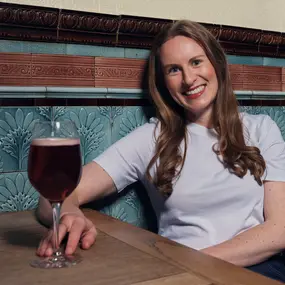
Beer educator, author and podcast host
Natalya Watson is an award-winning beer educator passionate about making beer education accessible and engaging for all. She currently works with WSET as Business Development Manager for their new beer qualifications.
Previously, Natalya ran her own Virtual Beer School business and was named Training Professional of the Year at the BII’s 2022 National Innovation in Training Awards. She is qualified as an IBD Beer Sommelier, Advanced Cicerone®, and WSET Beer Educator, and holds her WSET Level 2 Award in Beer, Level 2 Award in Wine, and Level 3 Award in Spirits.
Natalya is also the author of Beer: Taste the Evolution in 50 Styles and produces and hosts the Cheers with Nat podcast. Follow her on Instagram at @cheers_with_nat.