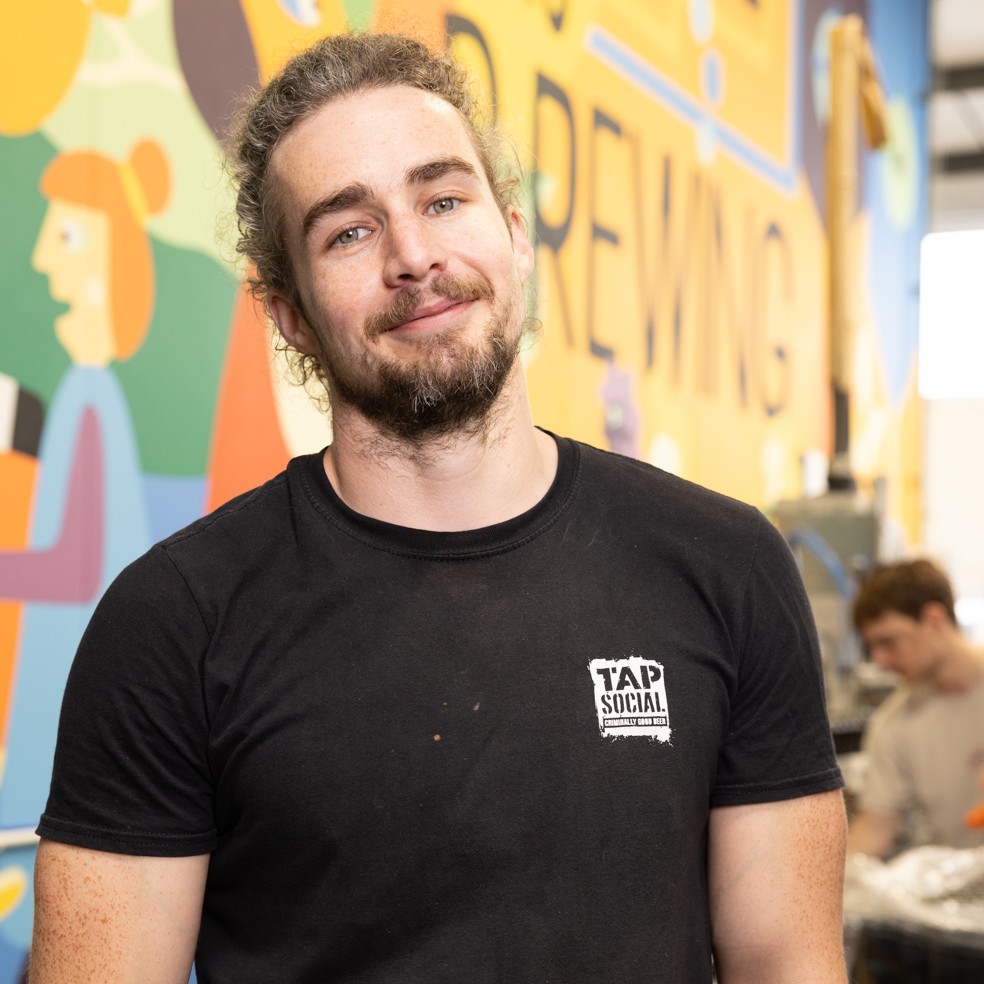
How Tap Social Movement Is Changing Lives Through Beer


 Amazon Music
  Youtube Music
 Key Takeaways
- Ben Addison shares his journey from working on large automated brewery systems at Purity Brewing to mastering hands-on manual brewing at Tap Social Movement.
- The conversation delves into the technique of hop dipping and how it helps create smoother, more rounded hop aromas in craft beer.
- Tap Social beers are defined by high quality, approachability, and occasional experimentation while remaining accessible to a wide audience of drinkers.
- Scaling up production to supply supermarkets like Waitrose brings unique industry challenges regarding consistency, shelf life, and cold storage management.
- At its core, Tap Social Movement operates as a powerful social enterprise that provides paid employment, training, and career progression for individuals in the prison system.
In this episode Martin speaks to Ben Addison, Head Brewer at Tap Social Movement in Oxford, about brewing beer with a purpose.
Ben shares his journey into brewing, from starting at Purity Brewing and working on large automated brewery systems to joining Tap Social and developing his skills on a hands-on manual brew kit. He also explains how hop dipping works and how the technique can create smoother, more rounded hop aromas.
The conversation explores what defines a Tap Social beer: high quality, experimental when appropriate, but ultimately welcoming and accessible to as many drinkers as possible. Ben discusses the brewery’s growth, supplying supermarkets such as Waitrose, increasing can production and the challenges of consistency, shelf life and cold storage.
At the heart of the episode is Tap Social Movement’s social enterprise mission. Ben explains how the brewery provides paid employment, training and progression opportunities for people who have been through, or are currently going through, the prison system. He shares how people can build confidence, learn new skills and move into brewing, sales, hospitality or their own business ventures.
Tap Social Links
Website: https://www.tapsocialmovement.com/
Insta: https://www.instagram.com/tapsocialmovement/
Facebook: https://www.facebook.com/tapsocialmovement
Frequently Asked Questions
Who is Ben Addison?
Ben Addison is the Head Brewer at Tap Social Movement in Oxford, known for his brewing expertise and dedication to the brewery's social mission.
What is the social mission of Tap Social Movement?
Tap Social Movement is a social enterprise that provides paid employment, training, and career support to people who have been through or are currently navigating the prison system.
What defines the style and quality of Tap Social beers?
Tap Social beers focus on being high quality, welcoming, and accessible to as many drinkers as possible, with room for purposeful recipe experimentation.
How does hop dipping work in brewing?
Hop dipping is a brewing technique that helps extract smoother, more rounded hop aromas for an enhanced flavour profile.
Martin (00:00)
Hello and welcome to another episode of the Beer Rep Chats With. And today I am delighted to be joined by Head Brewer Ben from Tap Social. Ben, thanks very much for joining the show.
Ben Addison (00:11)
Well, thanks for having me.
Martin (00:13)
mate, it's a pleasure, mate. I really, really like what you guys are doing down there. but for anyone who hasn't, you know, discovered you yet, can you tell us a little bit about yourself and and how you ended up becoming a brewer at Tap Social?
Ben Addison (00:25)
I started working at Tap Social five years ago, just as we're like coming out of the lockdown period. just it was a change for myself career wise. I've only ever really done like larger scale breweries. So it's been nice to fill that like kind of gap in my knowledge of working on like a manual system. All the other systems I worked on before that have been like fully automated. start your day by pressing start, go grab a coffee and
And come do some checks sort of thing. Great for learning
Martin (00:55)
Ha ha.
Ben Addison (00:56)
analyticals, but like a bit of a different soul to the beast sort of thing. and then
Martin (01:02)
Yeah.
Ben Addison (01:02)
also just 'cause to be honest with what tap does, it's pretty foster kind of support and it was nice to have the opportunity to contribute. It's been kind of fun watching it grow from like where the originals where the second site was where I started to where we are now in terms of even like production. I was going through some
the other day and I like, a big run used to be like ninety cases of cans and now it's like four hundred and ninety five. So it's been quite a big slight fun increase to work with. Yeah yeah. yeah.
Martin (01:34)
big jump. Yeah, definitely. Yeah.
So like where was you working before? Tap social.
Ben Addison (01:43)
so I main place work before that is I got into brewing starting at Purity Brewing. So I worked for them I worked for Flo and Erin there for about six years. And then I went and did a small little stint a brewery called Evolution with Donica, who used to be like Dig Brew and is now at Hawkstone and stuff like that. And then did the my lockdown stint was at West Berkshire Brewing. So like quite a big contractor facility, sort of that and then
Here yeah, kinda just if I if I like a place, I kinda apparently stay there for a long period of time and get quite into it, you know.
Martin (02:23)
That's good. So what what
Ben Addison (02:25)
Yeah.
Martin (02:25)
is it about brewing that kind of grabbed you in the first place? You know, what when did you realise you
wanted to make it a career?
Ben Addison (02:31)
When I got into brewing, I knew absolutely nothing about brewing. I kind of just got offered to go up to Purity because I was a bit bulshy with Flo and the head brewer and told him I didn't really like one of his beers. And he's like, Well, why don't you come up and have a look at the brewery? And had a mate who worked there at the time. So was like, Yeah, why not? And I just started seeing my now wife and working in a pub seven days a week. So I'd be good to have weekends and like, you know, go see her. And all I did for like the first
Martin (03:00)
Yeah.
Ben Addison (03:00)
month there was just clean Firkins with a jet wash. That was that was my job. And I got put in the racking room,
Martin (03:07)
Yeah.
Ben Addison (03:08)
so doing all their Firkins and stuff and then someone was off or something and they just taught me how to CIP a tank. And it was the first real time I really took note of like the brewery and the scale of like everything. And then I just started asking questions and like, how do you know this? And then I'd like in my mind brewing it always just been like just really
basic step by step thing and then they explained stuff to and I was like, it's really not. And then just kept asking questions like so how do you know what malt? How do you know what hops? Yeast. And then they just taught kept teaching me all these things. And every time I wasn't I just never stopped learning and then I was just hooked. Like you never do stop learning in brewing, I find. And I know that just always keeps me hooked. It's never
like there's always the there's that mean bell bell curve thing coming through like when you start
stuff you know is a brewery and then you reach a point where you think you know everything and then you come over that hump and realise you've known absolutely nothing about it. I think I've done that about four times now in
Martin (04:04)
Yeah.
Ben Addison (04:05)
brewing and then every time I just love it. I'm like, yeah, I have no idea about this thing and then I just like fixate on it. I just it's always something to learn, always
Martin (04:13)
Yeah, yeah.
Ben Addison (04:14)
something new. And I just find that endlessly fascinating. you learn about a new style that's been rediscovered and stuff like that.
Martin (04:20)
What's what's the what's the latest
thing that you've learned?
Ben Addison (04:25)
a bit behind on it, but like hot dipping in terms of like like the processes of brew. It was quite fun to learn. just never really done it and then just had the opportunity with our change of brewing beer festival 'cause of all the co labs. It's well, now's a good time to try it, I guess. And then that was quite fun just learning that. But that's been as I was chatting to people like, yeah, that's been around for ages I had no idea. Like they're just it must have passed me by stuff and then
Martin (04:52)
Yeah. Can you can you explain what
hop dipping is to to people listening?
Ben Addison (04:56)
Yeah, so hot dipping is you take some your hot wort cool it down to about I think it like 70 and you run that into your FV onto like either oil hop oil or hot pellets and it strips the I can never say it correctly and I know my hop supplies are gonna be really grumpy at me now. Myrcene the Myrcene oil out of the hop, so you lose some of that green like veggie note and it brings out some of the other
Like it it kind of like boosts more of the citrus oils to be the like like what's left and then you can it's there for the biotransformation with the yeast. Anyway, you like stew it like a tea like half an hour to an hour and then you just run in off from your heat X the cold wort to cool that down, and then you've just got all this like hot oil and volatiles in the beer ready for the yeast to do some biotransformation. Let's say you kind of try and pair it with a yeast that has some good biotransformation qualities and it
For me, I found it like it made a more smoother, like rounded aromatic, rather than quite harsh. Like not harsh word, but rather than like that punchy one which I do like and do love. It for me I found it just made a bit more harmonic, a bit more balanced and a bit more like brought out some flavours, meant you could use some hops that might not be the buzzword hops that's that still have that capability to be quite punchy. And basically it was a new process and I just wanted mess around with it.
No a new process to me and it kind of like thing around with
Martin (06:25)
I
I discovered hop dipping recently as well.
Ben Addison (06:28)
Yeah. Apparently it's been around for like years and
just completely missed it. stuff like that.
Martin (06:33)
like a hop stand.
Ben Addison (06:35)
Yeah, I really enjoy using it with like with still a dry hop at like mid ferm and post ferm and stuff like that. And the whirlpool just seeing it like it kinda like builds those layers and I like I like
that. Like that you get like use the same hop all the way through the process. I think like Siren's done this before or somebody or it might have been the same hop all the way through at different processes to show what it kind of brings out. Just for my own knowledge, like in learning. But it's kind of fun when we're doing it cause senior brewer Ross
we're both just like kids at a sweet shop like smelling the blow off piping like, it smells well, you get all these aromas coming out, it's like, what's going on? And it's just yeah, it's kinda like a joyful filled experience just learning this new process of yeah.
Martin (07:20)
Yeah, definitely. So so how did you come to join Tap Social and, you know, what attracted you to to the brewery beyond you know just a beer?
Ben Addison (07:30)
twofold really they really brought me to Tap Social. The biggest the biggest one is what Tap Social does. Like it's you know without belittling the other breweries I've worked for that it's kinda nice to have that there's a main mission overall. it is about making nice beer and really good quality beer, but we're also helping people who need the help and need to get back into the system of life and stuff like that. So it's
Just that little bit extra of like, yeah, like you can have a really bad day, the mash gets stuck or something like that, and then you'll get one of the guys who, when they started they only knew lager, be absolutely loving a westie, and then you're like, okay, like and then there's like seeing a couple quite not hesitant, but like semi reserved to absolutely just throwing banterus insults at you.
like just joking around with you and like seeing people like feel relaxed to be able to open up. It's kinda like really quite rewarding and then you stood there going, I can't really have a bad day 'cause the mash got stuck because there's a lot more to it that adds into it and stuff like that. And yeah. And then and then the other reason is
Martin (08:41)
Yeah. Yeah.
Ben Addison (08:43)
like I've never worked on a manual kit before. I used to get a little bit of stick if I've never really dug out a mash at any point in my career up until now. so like
Martin (08:51)
Yeah.
Ben Addison (08:54)
I wanted that to stop, so it's like, yeah, let's go manual and I don't know. I feel like manual kits always have a little bit more heart to em Like we know that we've reopened the runoff three notches, it might be a little bit too
Martin (09:04)
Yeah.
Ben Addison (09:04)
fast to put together. And I I enjoy that kind of like
Martin (09:10)
Hands on experience.
Ben Addison (09:11)
Yeah. it just Yeah, I think it's like not up. Well maybe up, but it just has a bit more to it. You feel a bit more like in the brew process. yeah.
Martin (09:22)
Yeah. Yeah, for sure. That's what it's all about, isn't it? Hands on. Just getting stuck in. so
Ben Addison (09:27)
Yeah, I got
Martin (09:29)
Yeah. So tap social is you know, developed a a good reputation for making some really good beers. what do you think defines a tap social beer?
Ben Addison (09:39)
They're kind of welcoming. Like we don't we we experiment with new things and stuff like that, but we're not at the end of the day, our big our ultimate goal is to get our message into as many hands as possible. with our cans we've got like the little messages of like facts and stuff. So we try and keep it interesting, really high quality, but welcoming. So I guess an example is like
so a lot of my friends really aren't into beer as much as I'm into beer, to the point that sometimes they just walk away from me when I'm talking about beer. And if I give them like a really big Yeah
Martin (10:12)
I know that feeling.
Ben Addison (10:14)
yeah. If I give like a really insane, like fruited sour, they kinda get a bit put off the stuff. But if you give like a
Martin (10:23)
Yeah.
Ben Addison (10:23)
like that like almost like branching IPA that like brings people in, they'll be like, that's quite nice and then I could be like, try this one then or try this so
I think to design to be available not available sounds like I'm saying other people aren't available, but like it's welcoming to people who aren't that into beer. They could come with their mates who are really into beer and still have a good time and enjoy the product. yeah. Don't get me wrong, I like doing weird and wonderful.
Martin (10:52)
Yeah, definitely.
Ben Addison (10:54)
I enjoy doing the weird and wonderful. I like bringing weird and wonderful for myself. But
Ultimately our end goal is to educate as many people about what we're doing. And to do that it's gotta be like a fairly
Martin (11:04)
Yeah.
Ben Addison (11:05)
consistently welcoming product.
Martin (11:09)
like a standard range of styles of beer rather than the the ones that are kind of out there, you know, like the like
Ben Addison (11:14)
Yeah.
Martin (11:15)
you said, like the crazy fruitied sours and stuff like that.
Ben Addison (11:17)
Like our main seller is
just is it's called Time Better Spent, it's our Citra Mosaic IPA. it's a very like Citro mosaic
Martin (11:24)
Yeah. You can't go wrong with Citra and mosaic.
Ben Addison (11:27)
Yeah. I always make the joke of it being a bit of like the Hallmark Christmas film combo. But it works and it and people enjoy it
Martin (11:33)
Yeah.
Ben Addison (11:34)
and it's wet and it's easy to understand what you're drinking when you have that. So it's like a more welcoming product
Martin (11:40)
Yeah.
Ben Addison (11:40)
than me going a bit mad and trying some like
strange farmhouse brew with a yeast source from Lithuania that only I will really understand or not or enjoy because they're going off on one sort of thing.
Martin (11:54)
Y
y yeast is hard to explain just it normally, rather than, you know, getting an experimental yeast that does
completely different
Ben Addison (12:01)
Ha ha ha.
Martin (12:02)
things. But yeah. So, you know, how's your have you has your like brewing changed or how you approach brewing changed since you've joined Tap Social? Obviously
you said you worked on a automatic kit and now you're on a manual kit, so I guess that's a a bit of a change.
Ben Addison (12:17)
Yeah. I'd say it's
become more relaxed. a lot of the other atmospheres they weren't they like they they were just intense. There was a lot going on and it was great. It was a great way to learn to work under pressure and stuff like that. And whereas now it's
terms of our like production and what we're brewing at moment. You could kind of just
feels more relaxed, you can get a bit more into it and like the subtleties of it rather than like running a centrifuge while having two a one and a half brews on at the go while you're also loading a tank if it's all for bottling and stuff like that. Great way to learn and ideal with pressure, but you kind of sometimes would miss not miss a part, but you'd miss just the fun of what you're doing. You are making a wonderful product at the end of the day and lots of people enjoy it regardless of like what it is. And this I know
I'd say I've become
Martin (13:12)
Yeah.
Ben Addison (13:12)
a lot more like relaxed in the situation, so and just enjoy it more. yeah.
Martin (13:19)
Yeah.
It's all about it's all about enjoying it, I mean as I think that goes probably for a lot of brewers, you know, once you stop enjoying what you're doing, you kind of look at it and go, Well, what am I doing this still? if I'm not enjoying it, why am doing it? it probably goes with every job that you do, you know, if you if you're not enjoying the job that you're doing, then it's you obviously time to move on.
Ben Addison (13:39)
Yeah, it's very easy for that resentment
to a job you're not enjoying to build quite quickly because it you then look for the bad day rather than like
Martin (13:48)
A good day
Ben Addison (13:50)
I guess as an example, I kind of enjoy I don't enjoy it, but I enjoy when stuff goes wrong now because it's like a problem solving situation. There's no like massive time constraint but like previous places like having a steam pipe blow out and then your steams off, which then adds
X amount repair time into your production, but you've got to get all this done is like a high pressure. Whereas now it's like well this is really annoying. But let's see how we could fix it. Let's
let's actually like break it down and see the process a bit better and like I enjoy taking pumps apart now, I guess, rather than like the stress of taking a pump apart 'cause it's gone
midway through your running, like now it's like, okay, we could quickly take this apart, like we're in a good spot and yeah.
Martin (14:30)
Is is there ever a day for a brewer where everything goes according to scale? You know, I don't think there's any day that ~ it goes smoothly. Exactly, yeah.
Ben Addison (14:37)
I don't think I'm still yet to have one. there's but that's what makes it fun. It's there isn't no routine to it and I think that's kinda why
I enjoy every day is something new. Like, I keep trying to have a day to
Martin (14:50)
Yeah.
Ben Addison (14:52)
catch up with some sales and stuff as we change the processes here. Every time I sit and open the laptop I'll hear a new noise, I'm like, That noise doesn't usually happen in the brewery, what's going on? And then I have to
Martin (15:01)
Mm-hmm.
Ben Addison (15:02)
go on like a little side quest to find out what's going on and yeah, it's great.
Martin (15:08)
Yeah. Yeah, yes. I mean it keeps you on your toes, that's for sure.
Ben Addison (15:13)
Yeah yeah. I guess that's what's always kept me so interested
in this is like it's yeah it's never the same day and it never will be the
Martin (15:21)
Yeah.
Ben Addison (15:21)
same day.
Martin (15:22)
Exactly that,
Ben Addison (15:23)
Right.
Martin (15:23)
yeah. So you've gone from you know, brewing from like a you know, relatively small local audience to producing on a bigger scale. Now you've got a supermarket contract with Waitrose and we were speaking earlier and you said that you've kind of increased in how much beer you're producing now from that. what's the transition been like from a you know, brewer's perspective?
Ben Addison (15:50)
kind of been working with Will, our ops manager, it's actually been quite seamless. like the first time we did our ever big first ever big run on the Can line was like a stressful day 'cause we're pushing our can line is when you have an engineer come and
Martin (16:05)
Pushing it to its limits.
Ben Addison (16:07)
Yeah, when you have an engineer come out to come do some work on it, they look at it and go, Ooh, haven't seen this for a few years. You kinda go, Okay, we're clearly pushing this to its maximum.
But then we like you just because
Martin (16:18)
Yeah.
Ben Addison (16:19)
we have that one really stressful run of it, you then take a step back and go, Well, this didn't work, this worked, and then we've kind of just got into a nice flow of it. The biggest change would be our can to keg ratio is it's just completely one eighty with so much more can oriented in terms of like our output because of Waitrose still do a fair amount of keg, but a lot that stuff is now can based, which has been probably the
biggest change as I saying at start, like when I started here, a big run was doing ninety cases of cans. That was considered a big day. And I think the other day
Martin (16:56)
Yeah.
Ben Addison (16:57)
I think our record it was done over like two shifts, but we did like nearly five hundred cases. then the other day we had just a standard day hit nearly four hundred and something. So like it's been a big change in that sense. And I'm yet to
Martin (17:14)
Yeah, for
sure.
Ben Addison (17:15)
Yet to go anywhere
where the can line plays fair and allows you to enjoy being on the can line without cursing it, then it's
Martin (17:23)
Mm-hmm.
Ben Addison (17:24)
yeah.
Martin (17:27)
So that that'd be the next improvement to the brewery than a bigger canning line.
Ben Addison (17:31)
Yeah, saying this already
in like the pipeline of discussion and how we do it, stuff like that. just to alleviate some stress. At the moment we're like a three head filler seamer and then just like manual pushdown and stuff like that. So just to even have like a deep output
Martin (17:47)
Yeah.
Ben Addison (17:48)
might might alleviate some of the stress for us and little steps. But because of how because of how the company
Martin (17:53)
Yeah, for sure.
Ben Addison (17:55)
grows and how we do it, it's a slightly more
organic growth like we look for we do like to crowdfund and we do look for investment but because of we're all to me it's social enterprise first. so any profits the company makes then gets reinvested into the company. but the main thing we do with that is we we're looking at like forgotten the word for it. venues. Don't know why that word escaped me just then. But like getting more venues because if we get more venues we can get more guys out on day release or people like we can supply more jobs. So like
We've just opened up a site like custom built one. ironic what great ten minutes down the road from me where I live, so I have a great time at the moment 'cause it's like pizzas, baked goods and beer, so I'm at a great time whenever I'm off. And then we're getting like another bar in
Martin (18:42)
Yeah.
Ben Addison (18:43)
Oxford like centre area and stuff like that. So that's kind of how we do it. So it's like we've we've got one in the line, but it'll be a slow growth to being able to get it in.
Which is nice because then you don't have the stress of like well we've got this and we need to pay it for itself like right away. We'd have that breathing room and yeah. Yeah.
Martin (19:01)
Yeah. Yeah.
Does like supermarket distribution create a different pressure around like consistency, like with you know, planning and shelf life compared to, you know, brewing just for tap rooms and stuff like that.
Ben Addison (19:14)
Yeah, I'd say so because the tap room, you know you're never gonna hit that shelf life end like we give nine months to our products, except our stout we give a year and I'd probably put that more because I have found one in my fridge the other day that was way past that and it was still lovely. So but then I'm not gonna make a customer do that. But like you you kinda know in a tap room
Martin (19:35)
Yeah.
Ben Addison (19:36)
you're not really ever gonna hit that best before.
Whereas the supers is a bit more
If they're not doing their stock rotation correctly and stuff like that. So we always whenever we do a run, we always keep some cans to retain and then we'll periodically check it at three month intervals and for a rapid aging system, like put it in a hot box and know that one week at that we'll put it like a month and do it like that. And just make sure we're consistently hitting. Yeah, consistency is a big thing because like
Martin (20:01)
Yeah. It's also storage as well.
Ben Addison (20:05)
yeah, storage is a big thing. So our cold store is always maxed out now, which is lovely.
It's a great sight to see, but there are days when you can then gotta pull everything out to get to that one keg at the back and but that's the fun of it, I guess. But like yeah, consistency's a big thing.
Martin (20:17)
Yeah, I can imagine. Yeah. And obviously you got
a
Ben Addison (20:21)
Just
Martin (20:21)
Yeah,
you gotta hope for the supermarket as well that they're storing it correctly as well at the correct temperature otherwise, you know. Well obviously
Ben Addison (20:25)
Yeah, that's the biggest thing. I'd say Waitrose
Waitrose seem quite good. But then for some reason in UK we don't really do refrigerated storage for beers.
I would love this. I would love this so much if every beer was in a fridge all the time, sort of thing. But I think there is like step like
I think some stacks get a lot better and take note of it and stuff like that. And I think that'll be a
next couple of years sort of thing, we'll start seeing a lot more of stuff being the cold chain will be a lot better. yeah. Especially with a heat wave that's just gone. There is a lot of like nerves in the back of my mind being
like, I really hope this is not being just left out in the sun. yeah.
Martin (21:06)
I mean we had about five, didn't we? Five heat waves all together. That's crazy being crazy.
Ben Addison (21:09)
it's been I think it's just been a consistent heat wave. I think just
making the numbers to make it seem not as bad, but like yeah, I think it's just been a consistent heat wave. I don't think it's cooled down once since like May. So
Martin (21:21)
Yeah. Yes it it has seemed like it's well we had a bit of rain today here in London, South London, and it wasn't that much. It's just made everything
Ben Addison (21:31)
Yeah.
Martin (21:31)
humid now. But yeah. but so moving on, you know, of course tap social isn't just a brewery that makes beer. You've got a a massive social enterprise built around giving people who have left prison or are currently in prison.
To give them an opportunity. So how does that mission actually work with the brewery day to day? I mean, I absolutely love what you guys are doing there I think it's an amazing thing that you do. But yeah, so can talk a bit more about that and how it works.
Ben Addison (22:04)
Yeah, so as a company as a whole, we always have two thirds of our workforce is someone who has been or is currently going through the prison system. so we tend to either throw the prison system will be coming from a local category D prison where they'll have their day release where they are allowed to go out and work and stuff like that.
And then the other the other one I said is people who have that history. yeah, for the brewery we tend to tends to lean more onto people who have the history of it. just because of the prison and alcohol, it's a bit more we still do get guys come through that, but they get a bit like a bit more nervous of people being around learning how to make alcohol, which is understandable.
and then when we we do get the guys in they tend to go onto the can line or kegging or just general like helping assistance and then if they if they are interested and very keen of which a lot of the guys always start to teach So one of the guys who wasn't through the day release but was like someone with a a background is now one of our brewers. it's actually like operates the brew kit and goes through the brew systems and stuff like that.
Martin (23:26)
Yeah. It's
Ben Addison (23:26)
Or you have
Martin (23:28)
awesome.
Ben Addison (23:29)
someone who one of the guys who's actually on our sales team going around Oxford and stuff like that. And then you also have it like
Martin (23:35)
lovely.
Ben Addison (23:36)
there we assist people in their own like business ventures as well. So there's a a guy at so we have a bakery as part of like our like tap social umbrella. he started his own P T training program, which we help him set up and stuff like that. And so they don't like we don't
It's just that this the guys stay on with us. If they want to stay on with us, they're always more than welcome to stay on. But we will also help them in that post period of like when they've come out a day release, or if they just feel they're they're more confident in the world and how where they are, like it'd be like even just helping CV's or like if they've got an idea we'll help promote that. So like the bakery, I think the bakery side from like just doing dougnuts, like one of the guys that we had through the system was
selling dougnuts or something like that, and through lockdown they're distributing dougnuts and then it's kind of escalated and now we've got like a fully operational bakery that's like just stems from this idea and really good baker, strongly recommend if you live
Martin (24:32)
that's brilliant
Ben Addison (24:33)
in the area. I eat too many of them. yeah,
Martin (24:37)
Yeah.
Ben Addison (24:37)
or they'll go in they'll go into a hospitality site to work for the bars there, or like we've got a pizza van original tap room that'll operate the pizza van and stuff that so we just Hey, you just we just
give them wherever they want to be and they're happy to be. annoyingly but not annoyingly, they are the hardest grafters I've ever worked with. And it's quite it always has to keep me on my toes with like start seeing scrubbing brew deck. Like I haven't personally stepped out and done that for a while. I need to now go out and do it just to be like, I do do it guys. Please don't like you know. They give
Martin (25:12)
Yeah,
Ben Addison (25:14)
you a top element because then everyone is so happy to be like
back into like getting back into the work system that like it just drives you to be better as well, which is really nice. yeah, no we
help when the guys go on we help them we stay in touch with them. become good friends with them as well. Like I like yeah.
Sometimes you just kinda forget actually what you're doing and
then it's just like a normal day in the office sort of thing and then like
Martin (25:41)
Yeah. Do you ever have like the was there been has there been moments where, you know, someone's come into the brewery, you know, lacking a bit of confidence and then, you know, seeing how they develop and you know, improve themselves and confidence and, you know?
Ben Addison (25:57)
Yeah. Most in my experience most of the guys when they come there very quiet and like feel like they're treading on eggshells and stuff like that. And one guy moving on
Martin (26:07)
Yeah.
Ben Addison (26:07)
and kinda stand like that and now he just is always having a banterish joke or being quite loud, not loud as a brace, we just you hear him before you see him now sort of thing. He's like and he's really come out of his shell and like you really
Martin (26:21)
Yeah.
Ben Addison (26:23)
he really starts to like
have a rapport with them and it's fun. because yeah then you like you forget about and then someone like yourself asks that question you remember their first day of just it being the complete opposite and you're like joking around again, remember when you used to be quiet, leave me alone sort of thing and now and now he's winding me up and hiding my things. Yeah, yeah. And so yeah it was really nice and I like
Martin (26:42)
Yeah. I miss them days.
Ben Addison (26:48)
to say you It's like any other work situation you become work friends and sometimes friends outside of work and it's just you
You just kind of I rarely ever sit and go, yeah, that every now and again we have yeah, I work with people who've done something bad, like made a mistake in their life. But you just kinda forget and you just work with as everyday situation
Martin (27:10)
Yeah.
Ben Addison (27:11)
and
Martin (27:12)
Exactly, 'cause a at the end of the day they are just people. you know.
regardless of the mistake they've made in their life. But yeah, I find that I've worked in pub business and hospitality for many, many years. And seeing people come in when they're really, really quiet. And then after two months, they're just, you know, the the life and soul of the team. And it's just like it's amazing to see how they that sort of environment helps people to come out of their shell a bit more and brings out their personality.
Ben Addison (27:42)
the whole like beer industry like the pub side and all that really helps that because it's so front facing. Well I always made the
Martin (27:49)
Yeah.
Ben Addison (27:49)
joke of the reason I get put in the brewery so I'm not front facing anymore because of working in the pub they hide me away sort of but it's still front facing. You're still representing the company and stuff like that and like people you see the guys build pride in that. So like with Waitrose that we did a like a lot of we go to a local Waitros store and do like a sampling event and stuff like that for people.
And some of the guys went and did that for us, and then you'd see them like find that enjoyment of that front-facing hospitality side of like just like the banter was chatting to the customer, the interest you they suddenly you see people take in the product that they're contributing to, and then they get the pride for the product being like, they really liked it. I think I did this bit on that brew, like I can that batch. And you're Yeah, you did. And like there's
Martin (28:36)
Yeah.
Ben Addison (28:37)
like this.
That pride in the work builds when that kind of like curtain drops sort of thing. And that's really fun. yeah.
Martin (28:46)
Yeah. Yeah, that that must be amazing to see and and obviously to feel as well that you've contributed to something and someone's given you really good feedback on the beer and and you as a part of brewing or making that beer happen for that customer.
Ben Addison (29:00)
Yeah.
Martin (29:02)
So like when when someone picks up a tap social beer in Waitrose, for instance, you know, and drinks it without knowing the story behind tap social movement, what would you like them to understand about what they're actually supporting?
Ben Addison (29:18)
I guess that like
They're helping people get their feet back under themselves, sort of thing. And hopefully they'll read the can and then understand a bit more of what we do. I'm hoping they'll drink the product, all this is really good, I'll buy another one and then put all these cans with all our stories on and then they'll start learning about actually what we do. But like
Martin (29:37)
Yeah.
Ben Addison (29:37)
I guess if someone doesn't know what we do, ultimately I'd like them to know that they are helping people get their lives back into where they would like it to be and
By just even buying a can, they're contributing to that and being part of that sort of breaking of that cycle. So they buy a can, I've got to restock that can, which means I've got to
Martin (29:58)
Mm.
Ben Addison (29:58)
we've to have a guy here helping us get through it. Yeah. my wife gave me an example, a weird example. I guess she was on about like she feels like she really enjoys when she goes out for lunch in London and the food thing comes in like one of them eco friendly variants of like a takeout box.
'Cause then she feels like she's contributing to the environmental thing. I was like, it's a bit of different scale, but I understand what you're saying. It's like that feeling like you're part of it by contributing. And it's like I guess I kinda like people to feel when they buy when they buy a product
Yeah.
Martin (30:31)
It's got a bit
of meaning to it and it's not just, you know, just a another product on the shelves.
Ben Addison (30:36)
Yeah. Like it it goes back like I said sort of how we operate as a social enterprise, any profit we make comes straight back into the business. So
it like people buy like buying that can that profit from that can is going straight back into us being able to do go into a purse for another venue, which will get us more jobs 'cause if we're always staying at two thirds employment, then another venue's what, like five people. So there's another like two, three jobs there for some of those people who need it. And yeah, so it's just like
Martin (31:06)
Do you know how many employees you currently have at the moment?
Ben Addison (31:09)
No, because you just opened a new venue I have no idea who works there.
Martin (31:14)
It's it's gonna
Ben Addison (31:16)
hang on, yeah. I could do some quick maths. I think there's five of there, there's three of you know. Bakery's the one I'm really bad at. The bakery whenever I go, there's always new faces because they're just ever needing more stuff. like
Martin (31:32)
all them dougnuts that they're eating.
Ben Addison (31:33)
Yeah. Yeah, it's the Marmite swells they do at the bakery they're my Achilles heel at the moment. no, I'd say we're like thirteen Yes, that's
Martin (31:40)
marmite swirls
Ben Addison (31:43)
it's good.
it's like whenever any of us go near the bakery or someone that sells our baked goods, the demand in the brewery is bring some of those back. So it's like yeah. I'd say we're like thirty plus people, maybe more than that now actually. yeah, there's but then we are still sitting at the like the two thirds of people have been through the system or are currently in that system. I think the last figure since we started we've given like a hundred and twenty thousand hours of paid work to people through to say like
Martin (32:13)
Yeah. I was
I was just reading about that as well. Yeah, over a hundred thousand hours. That's it's amazing. And that's been what for how many years? Since twenty eighteen, was it?
Ben Addison (32:20)
10th birthday this
yeah, it's a tenth birthday this year, I believe. So we've got from like having maybe one, two guys helping us at our original brew site to now like we've got like thirty, so you've got like fifteen, ten, fifteen guys helping us, stuff like that. So yeah. It's just yeah,
Martin (32:40)
Yeah. It's amazing.
Ben Addison (32:44)
I've I think like the directors are fantastic.
Martin (32:47)
Yeah.
Ben Addison (32:48)
If anyone wants to know, like
how we go about what we do, they are exceptionally open and guiding to anyone who wants to either start something similar to how we do it or just wants general advice on it. They just they're so passionate about it. it's great to watch. Like and listen to them talk because like every time I hear one of them talk, it just clicks a bit more. Like there's a little bit more I learn about it, a little bit more of like I get why they're so passionate about it. And it's just kind of fuels the fire more things like
Martin (33:17)
Yeah. inspiring.
Ben Addison (33:19)
Yeah.
Yeah.
Martin (33:21)
Yeah, definitely. they've done an amazing job and they're continuing to do so without fail. so after everything you've seen and experienced being a a brewer at Tap Social, what does being a brewer mean to you now compared to what it used to when you first started brewing?
Ben Addison (33:41)
question. I like that question. I guess more
Martin (33:44)
Yeah.
Ben Addison (33:46)
thinking about a bigger picture rather than like
chasing that one thing, like thinking of a broader spectrum of like what you could be doing. And so many breweries in the UK make such absolutely fantastic beer. But
Doing that little bit more to help just adds to that experience when you enjoy that beer and like knowing that it's going towards it. So I guess that's my biggest change is always thinking of that broader picture now of like how can it how can what you do if I ever went off and did my own thing or something like that, how could I contribute back to everything around me or do something that helps somehow. Even if it's like when you like you do the runs that like X goes to charity
always have a lot more time for that because it's something that's more thought of on a grander scale, I guess, of like contributing back to that. Even like going down like an environmental route, like people that you see like brews becoming like trying to become carbon neutral or being successfully carbon neutral, I think that's fantastic. And it's just like I guess I become more aware of what the other brews doing stuff like that are doing rather than my old obsession of what's the weirdest style of beer that's on that shelf right now. It's more like
I'll still look for that and I'll still look for the great artwork, but I also like to look for what the background I tend to read cans a lot more to know about what someone's doing. like because of how we put our cans. I'm now yeah, I now spent longer looking at the
Martin (35:09)
Yeah. Have they got a story? Have they got a story?
Ben Addison (35:15)
in the beer section, which was already too long anyway. So now I'm just there like really I'm very serious.
Martin (35:21)
You've
become one of them craft beer nerds that are constantly looking at the cans for ten minutes before they put it in the basket.
Ben Addison (35:25)
Yeah. I've got so many old cans that I've
got put to one side as like to make an inspiration or that I've been planning to make for God knows how long. I've just I like the artwork, so I've just got it and it's like I wanna look at that constantly. I love how it's been done, I like how it pulls you in and now I'm gonna add into that going, Well, it has a great social contribution as well. So it's like that, yeah. It's yeah, I think I think anything brewing wise that can help contribute socially.
It's just a better thing. Even if it's the most minute thing you can do, it's still a nice thing to be doing. I guess. Yeah. Yeah.
Martin (36:03)
Yeah. Yeah. Little things make big differences.
yeah, so we
so we're gonna we're gonna end up on the final question. it's gonna be a kind of a selling point from you, you know, to our listeners. you know, why should people check out Tap Social? And why should they go to Waitrose and and pick up some of the cans and stuff?
Ben Addison (36:27)
I think people should check out Tap Social as a whole, just as what we do as a the social enterprise side and just like Our taproom puts sort of mad events that I absolutely love. Like we have like an amateur wrestling federation go there, we do like a Robot Wars night stuff there and that that's just absolutely like draws in knowing. Like so many like like
Martin (36:45)
yes. Love a bit of robot wars.
Ben Addison (36:48)
even like our venues, like we do what we do with the guys coming through the system or out of the system, but then
All of our spaces are community spaces so people can also like go and do great fun things in there. So I strongly recommend if you're in Oxford to go to any of our venues and actually like just experience like that whole community aspect of it. I think one of the cool events I wanted to go to, but my little one was being a rascal, was they put the Lego movie on and you got to build your own Lego why you watched it, I was like, That's great idea. but yeah, there's stuff like that. But the tap social as a whole, I guess it's just
knowing what we do and reading into what we do and how we've helped contribute to helping these people get their lives back on track, get their feet under them, and just and being able to hopefully through us or just causing you to go and do additional reading, educate yourself on the system that we are shouting about and just how if we leant more into this side of things and helping with the rehabilitation and getting guys
through into work of this, it just benefits everyone because it drops the cost of the prison systems and the taxation that we have on the prison systems. It helps bring all that down, which then just benefits everyone else because then you're not paying as much into it and it's just a cycle that will theoretically will just help everyone. You are helping someone who needs the help and by doing that they won't reoffend, which means that you're not then having to foot the bill of
If they do sadly reoffend it going back into that system and that cycle of stuff. And like when you start reading into that stuff from buying our products and you pick up the can in Waitrose to have a look and you read that little like blurb of what we do, you start learning that it is a a pretty insane system. like cost and just an ability to fall back into that reoffend because you don't have that support. I think
Think we're like ninety-eight percent successful. Yeah. I mean like we don't have a anyone Yeah.
Martin (38:48)
Yeah. Or given an opportunity for work and stuff. Yeah. I think it's a big thing.
Ben Addison (38:58)
Yeah, and then you just read about like what we do and then the passion that goes behind it, and hopefully that just makes you want to buy another can. And then knowing that when when you buy that other can that's more of our product that needs to be packaged, which means we're gonna have to get more guys through the system to come help us and just overall keep contributing to
chipping away at the insanity that is the UK prison system. yeah.
Martin (39:23)
Yeah.
For sure. Yeah it's a lovely thing that you guys do. so yeah, we're I think we'll end it on that note. it was lovely talking to you, Ben, and everything about Tap Social and
Ben Addison (39:33)
Thank you, man. Thank you, having me on hopefully I didn't nervously ramble too much.
Martin (39:37)
No, no, you've been you've been a great guest, mate. Absolutely great. but for anyone who wants to learn a bit more about Tap Social, we'll have the website link for you in the description below.
And yeah, once again, Ben, thank you for coming on the show. And
Ben Addison (39:53)
Thank you for having me. it's been great.
Martin (39:56)
it's been a pleasure. And everyone who's listening, we'll see you again in a couple of weeks' time. don't forget to give a like and a follow and yeah, share the episode to all your friends. big up tap social and we'll see you again in a couple of weeks. Cheers.
Ben Addison (40:09)
Yes. Thank
you.
Martin (40:10)
Thank you.